

We visited Fremantle Prison in the Terrace, Fremantle, Western Australia at the end of our first full day in Australia.
It was build by convict labour in the 1850s, and was decommissioned in 1991 mainly due to it not meeting hygiene regulations as cells did not have toilets.
We were shown through the prison (in a small group of 4 as it was the Australian winter, so it was pretty quiet) by an extremely knowledgeable guide. There wasn’t a single question he couldn’t answer. So much so, one of the other tour members suspiciously asked him whether he had worked there when the prison was open, to which he responded “They tend to hire two types of people as tour guides; ex-guard and ex-prisoners. I’ll say no more”.
It was a fascinating prison. It was only operational 20 years ago, and everything had been left pretty much as it was on the day of closure, including some of the cells.
The prison experienced a riot on 4th January 1988, where seventy prisoners took over, taking 15 officers hostage. The riots led to a fire which caused $1.8million of damage. The damage was repaired and the prison opened, but only for another 3 years before it was decommissioned in 1991.
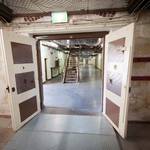
-
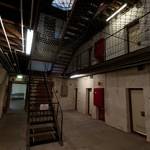
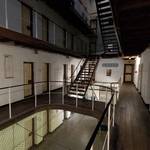
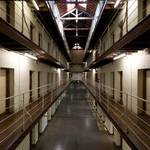
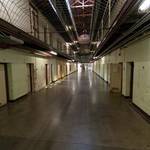
- Fremantle Prison. Our guide told us guards quickly got used to walking under the protection of the walkways above, to stop things being thrown or dropped on them from the upper level cells.
-
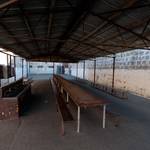
- Fremantle Prison – One of the yards. It was only more recently before closure that the shelter was added. Before this, prisoners had to stay outside all day with no protection from the sun or rain. Urns of hot water were also added for prisoners to make themselves hot drinks – but they ended up being used to scald each other in fights instead.
-
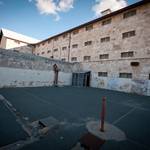
- The turnstyle on the entrance in the distance was only added after a riot in 1988. Before this there was no turnstyles, so there was no limit to the number of prisoners that could re-enter the cellblock at a time – this allowed 70 violent prisoners to rush into the block and join in with the riot. The addition of the turnstyle would mean the numbers of prisoners entering the block at a time could be slowed down, preventing future attacks escalating so quickly.
-
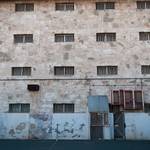
- A view of one of the cell blocks from the courtyard outside
-
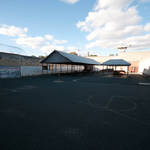
- Fremantle Prison – The yard where the 1988 riot started. Two prisoners were brought in from this yard to take water from the drums of boiling water near the entry in order to deliver tea and hot water to the other cells as the rest of the prisoners were locked back away. Instead, they took the water and poured it over two guards stationed near the door, seventy prisoners rushed in from the yard and the riot began.
-
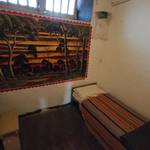
- Towards the end of the prison’s life, prisoners were allowed to paint on the walls of their cells.
-
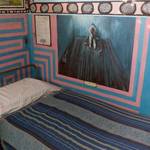
- Fremantle Prison – Even before the rules were relaxed, allowing prisoners to paint the walls of their cells, this prisoner had been allowed to paint his cell as the guards found it had a calming effect on him.
-
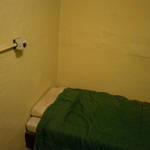
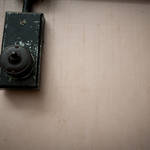
- Suicidal or dangerous prisoners were put in this room, a panic button was on the wall which would turn on a light outside the cell warning officers. The doors of this cell were also one of the only cells that opened outwards from the cell as opposed to inwards into the cell, so that the prisoner could not barricade themselves in the cell in an emergency.
-
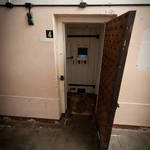
- A solitary confinement chamber. The guide told us these were oficially discontinued from use before the prison’s closure, but were often still “unofficially” used.
-
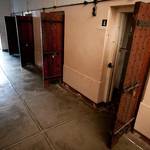
- Solitary confinement chambers
-
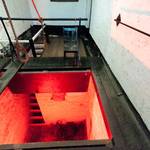
- The execution room. Between 1888 and 1984 this was the only legal place of execution in Western Australia, although the last person to be hanged here was a serial killer in 1964. A total of 43 men and 1 woman were hanged here.
-
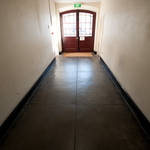
- The Entrance/Exit of the prison into the front of the building